 Airbnb Clone
 Binance Clone
 Chatgpt Clone
 Fiverr Clone
 Gojek Clone
 Instacart Clone
 Zoom Clone
 Swiggy Clone
 TikTok Clone
 Wise Clone
Choosing the Right App Development Path for Your Business So, you're looking to launch an app for your business. That's fantastic! But almost immediately, you're faced with a crucial decision: Do you go with a ready-made app or invest in custom software development? There's no single right answer – it hinges entirely on your specific …

Choosing the Right App Development Path for Your Business
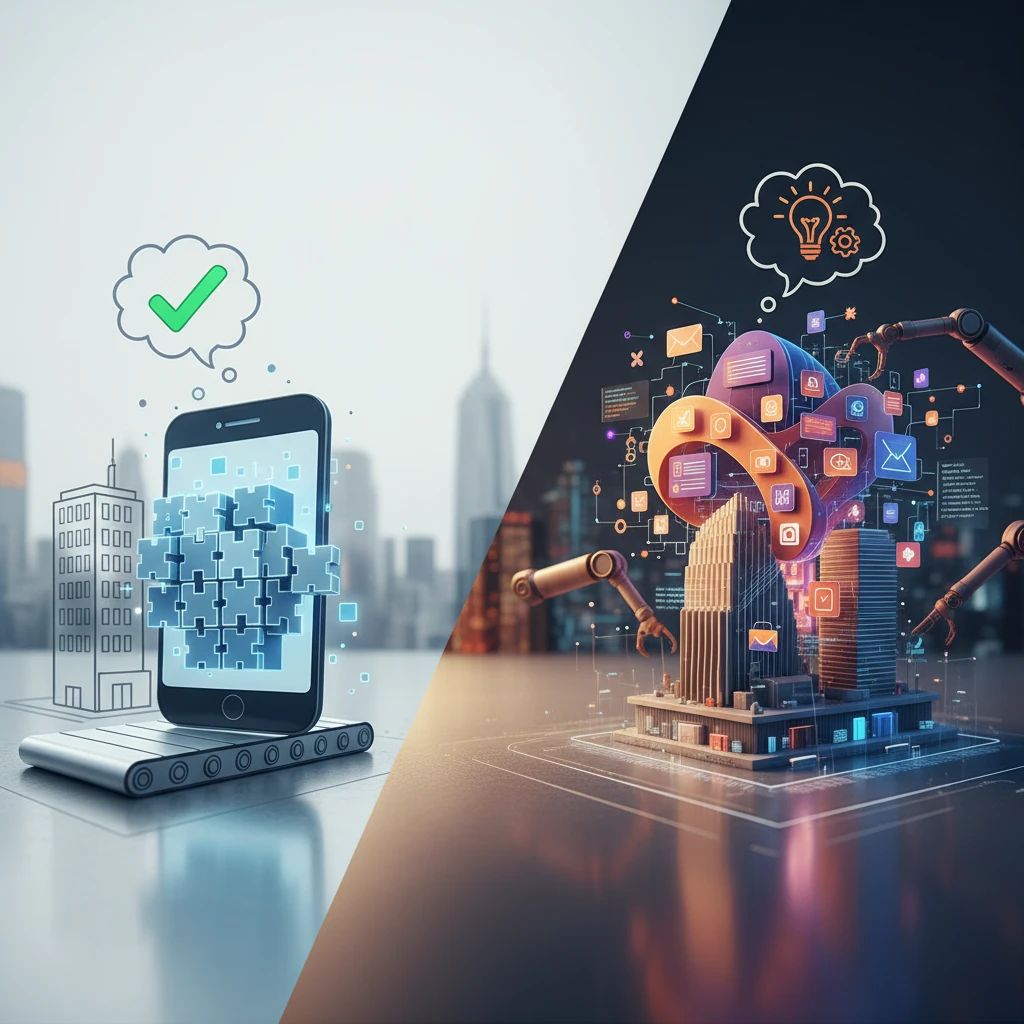
So, you’re looking to launch an app for your business. That’s fantastic! But almost immediately, you’re faced with a crucial decision: Do you go with a ready-made app or invest in custom software development? There’s no single right answer – it hinges entirely on your specific needs, resources, and long-term vision. Let’s break down the pros and cons of each approach to help you make the best choice. Think of it like this: are you buying off-the-rack or getting something tailored?
Understanding Ready-Made App Solutions

Ready-made apps, also known as “off-the-shelf” or “turnkey” solutions, are pre-built applications designed to address common business needs. Think of them as templates or building blocks that you can adapt to your specific requirements. They’re often marketed as quick, cost-effective solutions, particularly for startups and small businesses eager to get a digital presence established rapidly.
The Advantages of Ready-Made Apps
- Speed to Market: This is perhaps the biggest draw. You can launch a ready-made app in a fraction of the time it takes to develop a custom solution. You’re essentially skipping the entire design and development phase.
- Cost-Effectiveness: Ready-made apps generally have a lower upfront cost compared to custom development. The development work is already done, and you’re paying for a license or subscription.
- Established Features: These apps typically come with a set of core features that have been tested and refined over time. This reduces the risk of bugs and performance issues.
- Predictable Functionality: What you see is largely what you get. The feature set is usually clearly defined, allowing you to quickly assess if it meets your basic requirements.
The Drawbacks of Ready-Made Apps
- Limited Customization: This is the critical downside. Ready-made apps are designed to be general-purpose, which means they may not perfectly align with your unique business processes or brand identity. You might have to adapt your workflow to fit the app, rather than the other way around.
- Lack of Differentiation: Because these apps are available to anyone, they don’t offer much in the way of competitive advantage. Your app will likely look and function similarly to those of your competitors.
- Scalability Concerns: Some ready-made apps may not be easily scalable to accommodate future growth. You might outgrow the app’s capabilities as your business expands.
- Vendor Dependency: You’re reliant on the app vendor for updates, support, and security patches. If the vendor goes out of business or stops supporting the app, you could be left in a lurch.
- Hidden Costs: While the initial cost may be low, you might encounter additional fees for customization, add-ons, or support. Read the fine print carefully.
Exploring Custom Software Development
Custom software development involves building an app from scratch, tailored specifically to your unique business requirements. You have complete control over every aspect of the app, from its design and features to its functionality and scalability. It’s like having a bespoke suit made – it fits perfectly and reflects your individual style.
The Advantages of Custom Software Development
- Tailored to Your Needs: The biggest advantage is that the app is built precisely to your specifications. It aligns perfectly with your business processes, brand identity, and target audience.
- Competitive Differentiation: A custom app can give you a significant competitive edge by offering unique features and functionalities that your competitors don’t have.
- Scalability: Custom apps can be designed to scale easily as your business grows. You can add new features and functionalities as needed.
- Long-Term Investment: While the initial cost is higher, a custom app can be a valuable long-term investment that provides a sustainable competitive advantage.
- Full Control: You own the code and have complete control over the app’s future. You’re not reliant on a vendor for updates or support.
- Integration Capabilities: Custom applications are designed with your existing systems in mind, ensuring seamless integration and data flow.
The Drawbacks of Custom Software Development
- Higher Upfront Cost: Custom development is generally more expensive than ready-made solutions. You’re paying for the expertise of a development team and the time it takes to build the app.
- Longer Development Time: Building an app from scratch takes time. The development process can take months, or even years, depending on the complexity of the app.
- Higher Risk: Custom development involves a higher degree of risk than using a ready-made app. There’s a chance that the development team may encounter unexpected challenges or that the app may not meet your expectations.
- Requires More Input: You’ll need to be actively involved in the development process, providing feedback and making decisions along the way. This requires a significant time commitment.
Key Factors to Consider When Choosing
Okay, so you know the basics. Now, how do you decide which approach is right for your business? Ask yourself these crucial questions:
Budget Constraints
The Reality: Let’s be honest, budget often drives the initial decision. Ready-made apps are appealing because the upfront costs are lower. However, don’t solely focus on the initial price tag. Consider the long-term total cost of ownership (TCO), including customization, maintenance, and potential scalability limitations. You might end up paying more in the long run with a ready-made solution that requires extensive modifications or replacement down the line. Custom apps, while requiring more upfront investment, provide long-term cost predictability.
Time to Market
Need for Speed: How quickly do you need to launch your app? If you’re on a tight deadline, a ready-made app might be the only viable option. But think critically: is a rushed launch with a compromised solution better than a well-crafted custom app that takes a bit longer? Sometimes, a slight delay is worth the long-term strategic advantage. With custom development, a phased approach and agile methodologies can get key features launched early while the remaining functionality is completed.
Unique Business Requirements
The Core Question: This is where you need to be brutally honest with yourself. Are your business processes fairly standard, or do you have unique requirements that a ready-made app simply can’t accommodate? If you need features that are specific to your industry or business model, custom development is likely the only way to go. Think of a complex logistics company needing to integrate with dozens of different carrier APIs – a custom solution is almost always necessary. Colsent often combines proven modules with bespoke engineering to match each client’s unique business model, a useful hybrid approach.
Scalability Needs
Looking Ahead: What are your growth plans? If you anticipate rapid growth, you’ll need an app that can scale easily. Custom apps can be designed with scalability in mind, while ready-made apps may have limitations. Think about future integrations: Will you need to connect with new systems or third-party services? Custom apps offer far more flexibility in this area.
Level of Customization Required
Brand Identity: Does your brand have a strong visual identity? If so, you’ll want an app that reflects that. Custom development allows you to create a completely branded experience, while ready-made apps may offer limited customization options. Furthermore, consider workflow. If your processes are highly optimized for speed and efficiency, a ready-made solution that forces you to alter those flows can be detrimental. What appears to be a saving in initial development, can quickly become a costly error in ongoing performance.
A Hybrid Approach: Best of Both Worlds?
Don’t think you have to choose one or the other. A hybrid approach, where you leverage ready-made components and customize specific features, can be a viable option. This allows you to get to market faster while still tailoring the app to your unique needs. Colsent, for instance, combines proven ready-made modules with bespoke engineering to speed time-to-market while preserving flexibility. This offers a middle ground that can significantly de-risk development while also keeping budget in check.
Example: Combining Ready-Made with Custom Features
Imagine you’re building a marketplace platform. You could use a ready-made e-commerce platform as a foundation, but then customize the payment gateway integration and vendor management system to meet your specific requirements. Or consider a fintech app: leveraging a core banking system backend while building a custom UI/UX for specific user journeys.
Use Cases: Ready-Made vs. Custom – Real-World Examples
Let’s look at some examples to illustrate when each approach might be most appropriate:
Ready-Made App Use Cases:
- Basic Task Management: A small team needing simple project tracking could benefit from a ready-made task management app like Asana or Trello.
- Customer Relationship Management (CRM) for a Small Business: A startup with limited budget could use a ready-made CRM like HubSpot or Zoho CRM to manage customer interactions.
- E-commerce Store for Standard Products: Selling common products with standard shipping and payment options can often be accomplished with a platform like Shopify.
Custom App Use Cases:
- Complex Financial Trading Platform: A brokerage firm needs a custom platform to handle high-frequency trading and complex financial instruments.
- Healthcare App with HIPAA Compliance: A hospital needs a custom app to manage patient records and ensure compliance with HIPAA regulations (U.S. Department of Health & Human Services).
- Supply Chain Management System for a Large Manufacturer: A manufacturing company needs a custom system to track inventory, manage suppliers, and optimize logistics.
- On-Demand Service App with Geolocation & Real-Time Tracking: Think Uber or DoorDash. These require highly customized solutions for routing, dispatch, and real-time tracking.
Making the Final Decision: A Checklist
To help you make the final decision, here’s a checklist of questions to consider:
- What is your budget?
- What is your timeline?
- What are your unique business requirements?
- How important is scalability?
- How much customization do you need?
- What level of control do you want over the app’s future?
- What are the potential risks of each approach?
- What are the long-term costs of each approach?
- What are your integration needs?
The Future of App Development
The line between ready-made and custom app development is blurring. Low-code and no-code platforms are empowering businesses to build custom apps with minimal coding. AI-powered tools are automating many aspects of the development process. The key is to stay informed about the latest trends and technologies so you can make the best decision for your business. According to a Gartner report, low-code application development is projected to continue its strong growth trajectory, addressing the rising demand for faster software delivery (Gartner Press Release).
Final Thoughts: Choosing the Right Partner
Whether you choose a ready-made app or custom development, selecting the right partner is crucial. Look for a vendor or development team with a proven track record, relevant experience, and a deep understanding of your industry. Don’t be afraid to ask for references and case studies. A good partner will work closely with you to understand your needs and help you choose the best solution. They should also offer ongoing support and maintenance to ensure your app remains secure and up-to-date. This applies equally to selecting a partner to customize and implement a ready-made app, or to build a completely bespoke solution.
Ultimately, the decision between ready-made and custom app development is a strategic one. Weigh the pros and cons of each approach, consider your specific needs, and choose the path that best aligns with your business goals. And remember, it’s perfectly acceptable to explore a hybrid approach! The important thing is to take the time to make an informed decision.