 Airbnb Clone
 Binance Clone
 Chatgpt Clone
 Fiverr Clone
 Gojek Clone
 Instacart Clone
 Zoom Clone
 Swiggy Clone
 TikTok Clone
 Wise Clone
In today’s fast-paced digital economy, users prefer convenience over complexity. Instead of downloading separate apps for ride booking, food delivery, courier services, and grocery orders, people now prefer a single platform that handles everything. This is where super apps come in. Super apps combine multiple on-demand services into one unified ecosystem, allowing users to access …

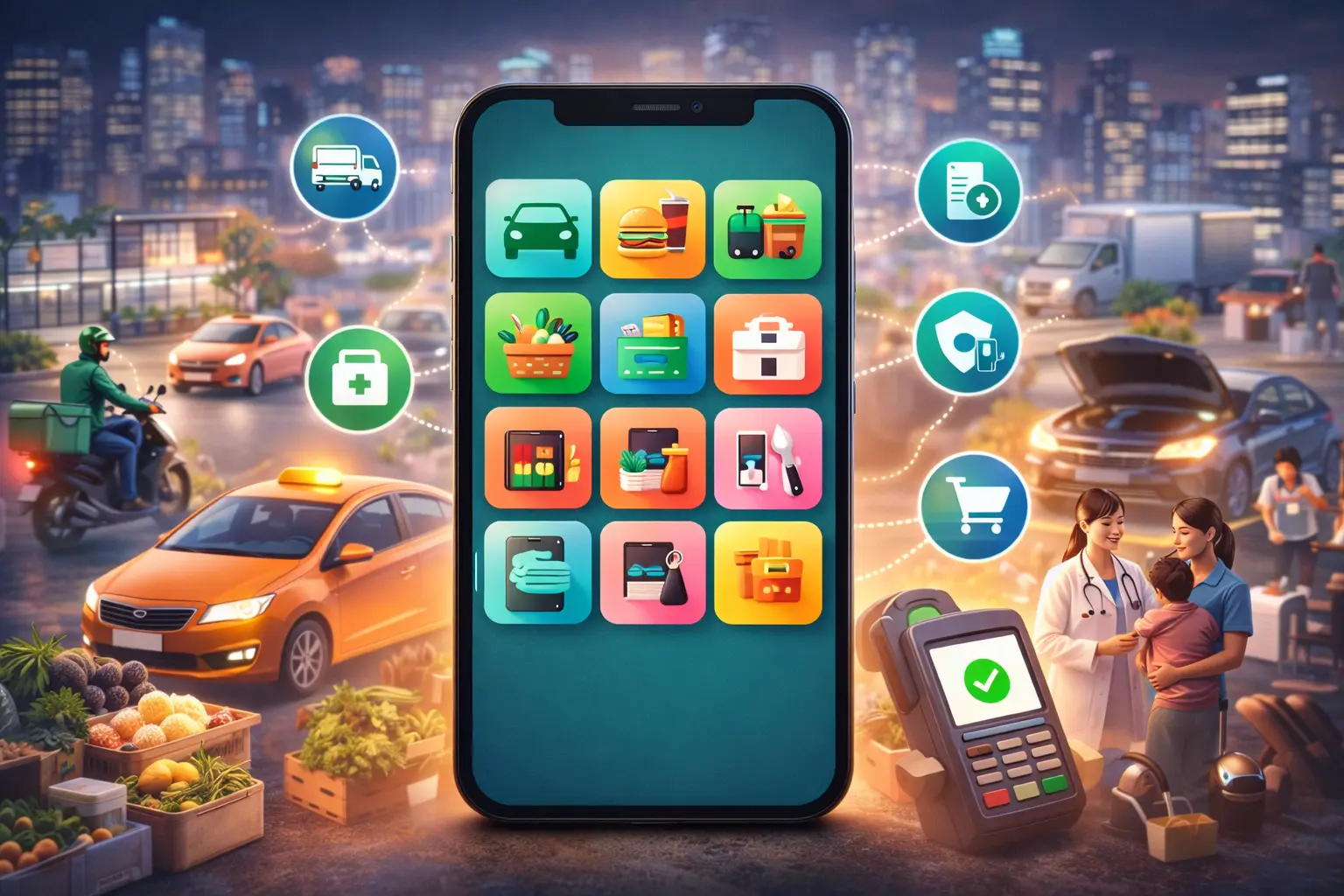
In today’s fast-paced digital economy, users prefer convenience over complexity. Instead of downloading separate apps for ride booking, food delivery, courier services, and grocery orders, people now prefer a single platform that handles everything. This is where super apps come in. Super apps combine multiple on-demand services into one unified ecosystem, allowing users to access daily services through a single login and payment system.
Gojek-style super apps have proven that multi-service platforms can drive higher user engagement, better retention, and stronger revenue opportunities. Businesses across regions are now launching Gojek clone super apps to create their own multi-service marketplaces. Companies like Colsent help businesses build scalable super app platforms with customer apps, provider apps, merchant panels, and centralized admin systems. To understand how these platforms work, let’s explore how Gojek clone super apps manage multiple daily services inside one platform.
What Is a Gojek Clone Super App?
A Gojek clone super app is a multi-service on-demand platform that allows users to access services like:
- Ride-hailing
- Food delivery
- Grocery delivery
- Courier and parcel services
- Pharmacy or retail delivery
- Home services (optional expansion module)
Instead of managing multiple apps separately, the super app uses shared infrastructure such as wallet systems, user profiles, promotions, notifications, and support systems.
This centralized approach reduces operational costs and improves user experience.
The Core Architecture Behind Super Apps
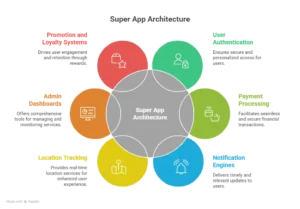
Managing multiple services inside one platform requires modular architecture. Each service operates as an independent module but connects to shared systems like:
- User authentication
- Payment processing
- Notification engines
- Location tracking
- Admin dashboards
- Promotion and loyalty systems
This design allows businesses to launch with a few services and expand gradually without rebuilding the platform.
Step 1: Unified User Experience Across Services
One of the biggest advantages of Gojek clone super apps is the unified user experience. Users can:
- Log in once
- Use one wallet across services
- Track all orders and rides in one dashboard
- Receive unified notifications
- Access centralized support
This reduces friction and increases app usage frequency.
For example, a user may book a ride in the morning, order lunch during the day, and send a courier parcel in the evening — all from the same app.
Step 2: Multi-Service Dispatch and Resource Management
Super apps intelligently manage service providers such as:
- Drivers
- Delivery partners
- Service professionals
- Merchants and stores
Instead of maintaining separate supply networks, super apps often use shared provider pools. For example:
- Ride drivers can also handle courier deliveries
- Delivery partners can support food and grocery deliveries
This increases provider utilization and reduces idle time.
Step 3: Smart Service Routing and Workflow Separation
Even though services are unified, each service follows its own workflow. For example:
Ride Service Workflow
Booking → Driver Matching → Pickup → Trip → Drop → Payment → Rating
Food Delivery Workflow
Restaurant Selection → Order Placement → Restaurant Preparation → Pickup → Delivery → Payment → Rating
Grocery Workflow
Product Selection → Cart → Slot Booking → Shopper Assignment → Picking → Delivery → Final Billing
The backend system manages these workflows separately while maintaining unified user data.
Step 4: Centralized Payment and Wallet System
A unified wallet is critical in super apps. Users can:
- Add money once
- Use across all services
- Receive cashback and loyalty rewards
- Apply promotions across services
This increases customer retention and cross-service adoption.
For businesses, unified payments simplify accounting and revenue tracking.
Step 5: Unified Promotions and Loyalty Programs
Super apps use cross-service promotions to increase engagement. Examples include:
- Ride discount after food order
- Free delivery for grocery after minimum wallet usage
- Loyalty points redeemable across services
This ecosystem-based reward system increases user lifetime value.
Step 6: Merchant and Provider Ecosystem Management
Super apps include dedicated dashboards for:
Drivers / Delivery Partners
- Trip management
- Earnings tracking
- Incentives and bonuses
- Availability management
Merchants / Stores
- Catalog management
- Inventory updates
- Order acceptance and preparation tracking
- Settlement and payout reports
This structured ecosystem helps maintain service quality across all modules.
Step 7: Centralized Admin Control for Multi-Service Operations
The admin panel is the backbone of a Gojek clone super app. It allows businesses to manage:
- User and provider onboarding
- Zone-based service activation
- Pricing and commission rules
- Promotions and referral programs
- Dispute and refund workflows
- Real-time service monitoring
- Performance analytics
Admin systems also help businesses scale city by city using zone-based configurations.
Step 8: Safety and Trust Across All Services
Super apps must maintain trust across all services. Core safety features include:
- Provider KYC verification
- SOS emergency systems
- Order tracking and proof of delivery
- Masked communication
- Fraud detection signals
Trust becomes especially important when expanding to new markets.
How Gojek Clone Super Apps Generate Revenue
Super apps typically use multiple monetization channels:
- Commission per transaction
- Delivery or booking fees
- Merchant subscription packages
- Featured listings and promotions
- Corporate service contracts
- Surge pricing (ride or high-demand delivery)
Multi-service revenue streams create stronger financial stability.
Why Businesses Are Investing in Gojek Clone Platforms
Businesses prefer clone-based super apps because they offer:
- Faster time to market
- Proven business workflows
- Scalable architecture
- Multi-service expansion capability
- Lower development risk
Colsent helps businesses build customizable Gojek clone super apps with customer apps, provider apps, merchant panels, and advanced admin control systems.
Conclusion
FAQs
What is a Gojek clone super app?
It is a multi-service on-demand platform that combines ride-hailing, food delivery, courier, grocery, and marketplace services within a single customer app supported by provider and admin systems.
Can multiple services share the same drivers or delivery partners?
Yes, many super apps optimize provider utilization by allowing drivers or delivery partners to handle multiple services such as rides and courier deliveries.
How do super apps increase user retention?
By offering multiple daily-use services inside one platform, super apps encourage frequent engagement and cross-service usage.
Can Gojek clone super apps scale to multiple cities?
Yes, using zone-based service configuration, modular architecture, and city-level operational controls, super apps can expand city by city.
What is the biggest challenge in building super apps?
Managing multi-service operations efficiently while maintaining a consistent and smooth user experience across all modules.
What apps are included in a Gojek clone solution?
A typical solution includes a customer app, driver/delivery partner app, merchant/store panel, and an admin dashboard for centralized control.
How do super apps generate revenue?
Revenue streams typically include commissions per transaction, delivery or booking fees, merchant subscriptions, promoted listings, surge pricing, and corporate service contracts.
Can services be launched gradually instead of all at once?
Yes, businesses often start with 2–3 core services and expand gradually using a modular super app architecture.
What integrations arerequiredfor a super app?
Essential integrations include maps and routing services, payment gateways, SMS/OTP verification, push notifications, real-time tracking, and analytics tools.
How does the admin panel manage multiple services efficiently?
The admin dashboard enables service configuration, pricing rules, KYC approvals, payouts, live tracking, performance monitoring, and dispute management across all services.