 Airbnb Clone
 Binance Clone
 Chatgpt Clone
 Fiverr Clone
 Gojek Clone
 Instacart Clone
 Zoom Clone
 Swiggy Clone
 TikTok Clone
 Wise Clone
Ride-hailing apps have completely changed how people move within cities. What once required waiting on the roadside or calling a taxi service can now be done in seconds using a smartphone. Today, users expect instant driver matching, accurate ETAs, transparent pricing, and safe ride experiences. Behind this smooth experience is a complex system of real-time technologies, dispatch …

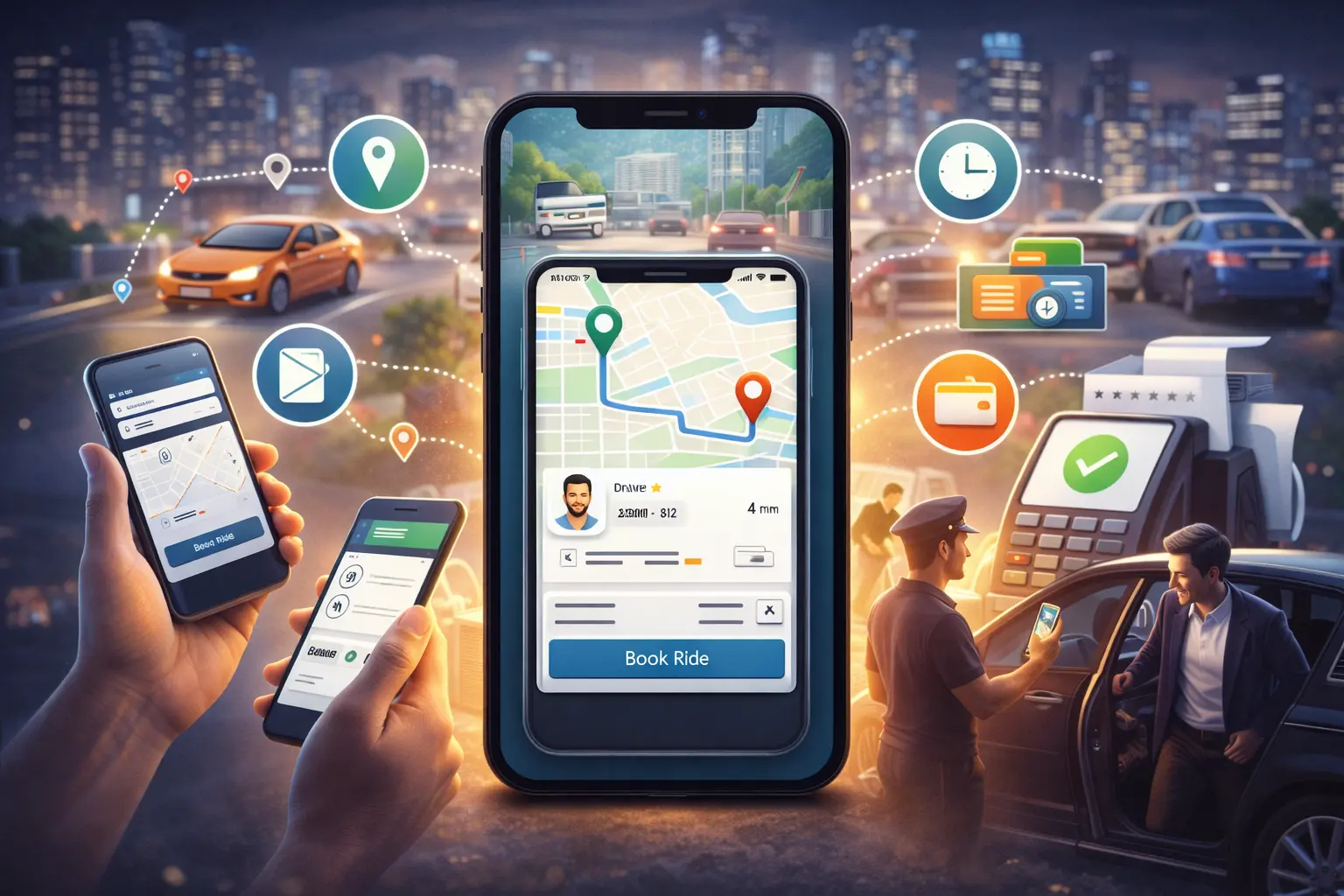
Ride-hailing apps have completely changed how people move within cities. What once required waiting on the roadside or calling a taxi service can now be done in seconds using a smartphone. Today, users expect instant driver matching, accurate ETAs, transparent pricing, and safe ride experiences. Behind this smooth experience is a complex system of real-time technologies, dispatch algorithms, and operational workflows working together.
Uber-style platforms are no longer limited to global giants. Many startups and enterprises are now building Uber clone apps to launch their own ride-hailing businesses in specific cities or regions. Companies like Colsent, which specialize in on-demand app development, help businesses build scalable ride-hailing platforms with customer apps, driver apps, and powerful admin control systems. To understand how these platforms really work, let’s go step-by-step inside an Uber clone app — from ride booking to trip completion.
What Is an Uber Clone App?
An Uber clone app is a ready-to-deploy ride-hailing platform that replicates the core functionality of global taxi booking apps. It typically includes three main components:
- Customer App (for booking rides)
- Driver App (for accepting and managing trips)
- Admin Panel (for operations, pricing, and monitoring)
Instead of building from scratch, businesses use clone-based architectures to launch faster, customize features, and scale across multiple locations.
Step 1: User Opens the App and Sets Ride Details
The ride journey starts when the user opens the app and enters pickup and drop locations. Modern Uber clone apps automatically detect the user’s current location using GPS. Users can also manually pin locations on the map for better accuracy.
At this stage, the app typically shows:
- Available ride categories (Mini, Sedan, SUV, Bike, etc.)
- Estimated fare range
- Estimated arrival time
- Nearby driver availability
This real-time data is pulled from maps, driver location tracking, and pricing engines working simultaneously.
Step 2: Fare Calculation and ETA Prediction
Once ride details are entered, the system calculates pricing based on multiple factors such as:
- Distance between pickup and drop
- Estimated travel time
- Traffic conditions
- Demand and supply (surge pricing if enabled)
- Base fare and platform fees
Modern Uber clone platforms ensure pricing transparency by showing fare breakdowns. This builds user trust and reduces ride cancellations.
ETA prediction also plays a major role. It is calculated using traffic APIs, historical ride data, and real-time driver location.
Step 3: Smart Driver Matching and Dispatch
After ride confirmation, the dispatch system searches for the most suitable driver. Matching is not just based on distance. A modern Uber clone app may consider:
- Driver proximity to pickup
- Driver acceptance rate
- Driver cancellation history
- Driver idle time (fair trip distribution)
- Traffic direction and route feasibility
If a driver declines the request, the system instantly reroutes it to the next best available driver. This ensures minimal waiting time for users.
Step 4: Driver Accepts Ride and Navigation Begins
Once a driver accepts the trip:
- Rider receives driver details (name, rating, vehicle info)
- Driver receives pickup location and route navigation
- Live tracking starts for both driver and rider
Many Uber clone apps include OTP-based trip start verification to ensure ride safety and prevent misuse.
Step 5: Real-Time Trip Tracking and Communication
During the ride, the platform enables:
- Live route tracking
- Estimated arrival updates
- In-app chat or masked calling
- Trip sharing with friends/family
- These features improve user safety and transparency.
From the backend, the admin panel tracks:
- Active rides
- Driver performance
- Service zones
- Real-time trip status
Step 6: Trip Completion and Payment Processing
Once the ride ends:
- Final fare is calculated (including tolls or waiting charges if applicable)
- Payment is processed via selected method (UPI, card, wallet, or cash)
- Invoice is generated automatically
Digital payments are now dominant in most regions, but flexible payment options improve customer adoption.
Step 7: Ratings, Feedback, and Support Handling
After trip completion:
- Rider rates driver
- Driver rates rider
- Users can report issues
- Refund workflows can be triggered
This two-way rating system helps maintain service quality and platform trust.
Behind the Scenes: Admin Operations That Keep the App Running
The admin panel is the operational brain of an Uber clone platform. It controls:
- Driver onboarding and KYC verification
- Pricing and surge configuration
- Zone-based ride availability
- Incentive and bonus programs
- Fraud detection signals
- Customer support and dispute management
Without strong admin controls, ride-hailing businesses struggle to scale.
Key Safety Features Inside Modern Uber Clone Apps
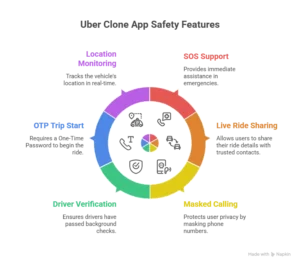
Safety is now a core expectation, not a premium feature. Most modern platforms include:
- SOS emergency support
- Live ride sharing
- Masked calling
- Driver background verification
- OTP trip start
- Real-time location monitoring
These features are especially important when expanding into new cities or regions.
How Uber Clone Apps Generate Revenue
Most ride-hailing businesses follow multiple monetization models:
- Commission per ride
- Driver subscription plans
- Cancellation fees
- Surge pricing share
- Corporate ride partnerships
- In-app promotions or ads
A balanced model ensures driver retention while maintaining platform profitability.
Why Businesses Are Choosing Uber Clone Solutions
Instead of building ride apps from zero, many businesses prefer clone-based platforms because they offer:
- Faster launch timelines
- Proven business workflows
- Scalable architecture
- Custom feature integration
- Lower development risk
Colsent helps businesses deploy Uber clone solutions with customization options for city operations, pricing strategies, and feature modules.
Conclusion
FAQs
What is an Uber clone app?
It is a ready-made ride-hailing platform that includes customer, driver, and admin systems to manage bookings, dispatch, payments, and operations.
How long does it take to launch an Uber clone app?
The timeline depends on customization and feature requirements, but clone-based solutions significantly reduce development time compared to building from scratch.
What integrations are required in an Uber clone app?
Essential integrations include maps and routing services, payment gateways, SMS/OTP verification systems, push notifications, and analytics tools.
Can Uber clone apps scale to multiple cities?
Yes, with zone-based configuration, multi-city settings, and scalable backend architecture, the platform can expand city by city.
What safety features are essential in ride-hailing apps?
Core safety features include SOS support, live trip tracking, driver verification, OTP-based trip start, and ride-sharing options.
How do Uber clone apps generate revenue?
They typically earn through ride commissions, driver subscriptions, surge pricing, cancellation fees, corporate ride plans, and in-app promotions.
Can the platform support multiple vehicle categories?
Yes, Uber clone apps can support various ride categories such as bikes, economy cars, premium vehicles, and SUVs with flexible pricing rules.
Is it possible to customize pricing and commission structures?
Yes, pricing models, surge rules, commissions, and service fees can be configured through the admin panel.
Do Uber clone apps include driver and rider rating systems?
Yes, two-way rating and feedback systems help maintain service quality and improve trust within the platform.
What admin features are necessary for smooth operations?
Important admin features include driver onboarding management, live ride monitoring, pricing controls, dispute handling, payouts, analytics dashboards, and fraud detection tools.